


Transmission imaging of natural and engineered materials
High Flux Isotope Reactor
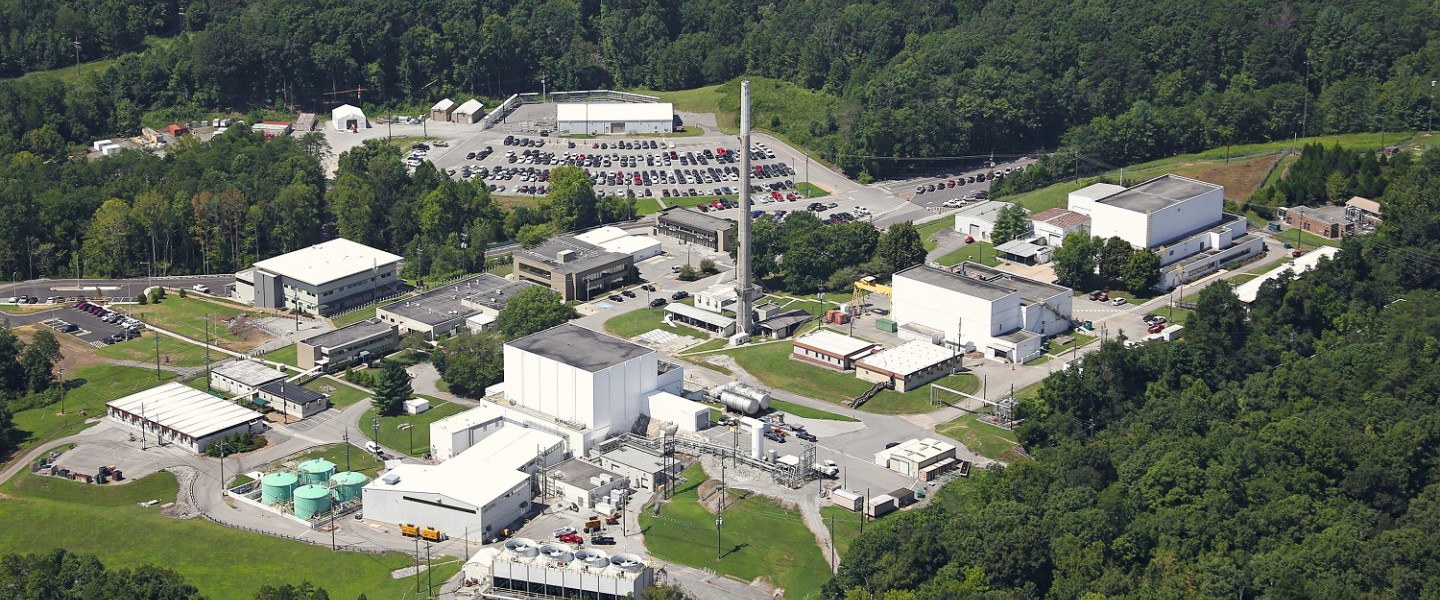
Completed in 1965 and operating at 85 megawatts, HFIR’s steady-state neutron beam is the strongest reactor-based neutron source in the United States. The thermal and cold neutrons produced by HFIR are used to study physics, chemistry, materials science, engineering, and biology. The intense neutron flux, constant power density, and constant-length fuel cycles are used by more than 500 researchers each year for neutron scattering research into the fundamental properties of condensed matter.
HFIR Celebrates 60 Years of Safe Operations and Scientific Achievements
How Neutrons are Made at the ORNL’s High Flux Isotope Reactor – Watch animation here:
The neutron scattering research facilities at HFIR contain a world-class collection of instruments used for fundamental and applied research on the structure and dynamics of matter. HFIR is also used for medical, industrial, and research isotope production; research on severe neutron damage to materials; and neutron activation analysis to examine trace elements in the environment. Additionally, the building houses a gamma irradiation facility that uses spent fuel assemblies and can provide high gamma doses for studies of the effects of radiation on materials.
Recent discoveries made possible by neutrons at HFIR are helping to unravel the secrets of materials and energy. This new knowledge also leads to improvements in every day products like solar cells, hard drives, drugs, and bio-fuels. In addition, HFIRs capabilities help solve crimes and isotopes produced at HFIR are fueling the discovery of new elements and space flight.
Neutrons have led to the discovery and improvement of many new materials and technologies:
HFIR History
HFIR was constructed in the mid-1960s to produce transuranic isotopes—“heavy” elements such as plutonium and curium. Since then its mission has grown to include materials irradiation, neutron activation, and, most recently, neutron scattering. Learn More